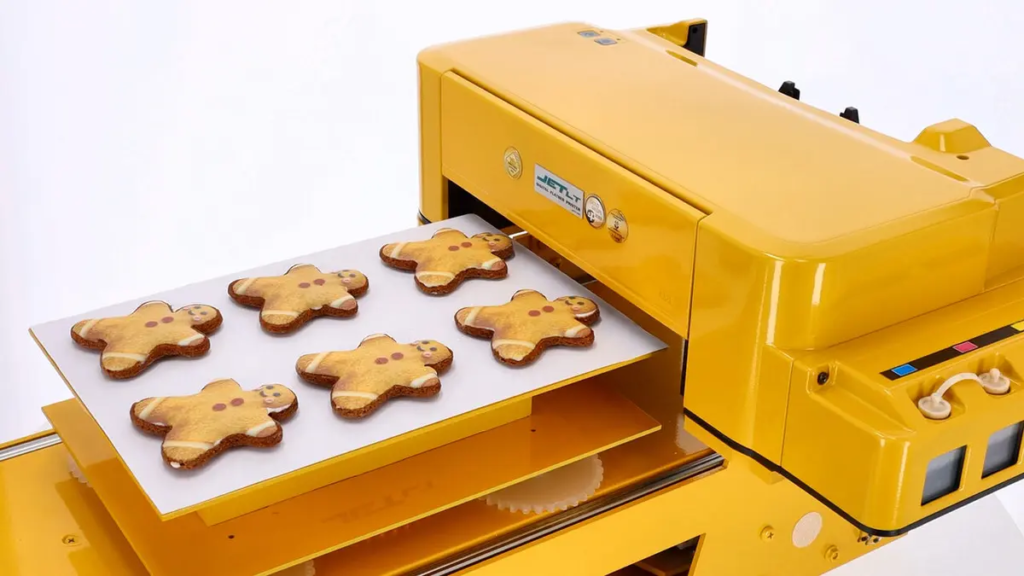
The small bakery around the corner used to compete on the same terms as every other bakery in town: flavour, portion size, price. In 2026 the game has changed. Consumers no longer just want a wedding cake — they want the photo of the couple on top of it. They no longer want a box of chocolate — they want the company logo pressed into each bar for the corporate gift bag. And they are willing to pay a 30–50% premium for that personal touch. This shift, quietly reshaping the European confectionery market, is powered by a small piece of equipment: the food printer.
What edible printing actually does
An edible printer is a modified Epson EcoTank inkjet where the classic ink cartridges are replaced with EU-certified food-grade CMYK inks. The paper tray becomes an adjustable platform capable of holding products up to 150 mm high — everything from a small chocolate bar to a full wedding cake tier. The print head sprays ink contactlessly from a few millimetres above the surface, so even delicate meringue, tempered chocolate or fresh macarons can be decorated without being touched.
Resolution ranges from 720×720 to 5760×1440 dpi, which means photograph-quality images — including recognisable faces on birthday cakes and clean corporate logos on B2B chocolate gifts. A single A4 print costs between 0.15 and 0.30 euro in consumables, which makes the economics of personalisation genuinely attractive for a small business.
Where small bakeries actually use it
Weddings and family celebrations. The couple’s photograph on the top of the cake replaces generic decorations. Customers pay 30–50 euro extra for a truly unique wedding cake, and a well-run bakery fulfils 20–40 such orders every month.
Corporate gifting (B2B). Chocolate bars printed with client logos have become a common conference gift, thank-you present or employee award. Average B2B order size ranges from 200 to 800 euro, and once a company places one order, repeat business follows almost automatically.
Seasonal peaks. Christmas gingerbread with personal messages, Mother’s Day chocolate featuring children’s drawings, Valentine’s cakes with couples’ photographs. Seasonal peaks alone can account for 30–40% of annual revenue in bakeries that invest in personalised production.
The business case
A dedicated food printer from a European manufacturer sells for around 1,800 euro net. That price includes the machine, an initial set of food-grade inks, a starter pack of sugar sheets and technical support in the customer’s language. Consumables — a bottle of CMYK ink lasts several hundred prints and costs about 15 euro — are the only recurring cost.
The practical maths: a bakery producing 30 personalised prints per month at an average margin of 25 euro adds 750 euro of monthly gross revenue. The equipment pays for itself in three to four months, and every subsequent print is close to pure margin.
Customer loyalty is the less visible but equally important factor. Data from European retail confectionery shows that shops offering personalisation achieve a 35–40% higher repeat-order rate than a standard competitor of the same size. The reason is simple — a customer who once received a photo cake or a personal logo bar remembers where it came from, and they tell their friends.
What it takes to start
Introducing edible printing technology into an existing bakery is not a heavy investment. A single dedicated table, a standard power socket and a clean working area are enough. Technical training takes about a week — preparing artwork in familiar tools such as Photoshop or Canva, maintaining the ink lines, and preparing the surface before printing. Most manufacturers ship the machine with language-native support, particularly intense during the first three months.
Personalisation is no longer a competitive edge in European bakeries — it is fast becoming the baseline. The small business owners who invest in the technology in 2026 have a real chance of capturing a strong position in their local market before the average competitor catches up. And the entry ticket, for once, is genuinely affordable.
Leave a Reply